<?xml version="1.0" encoding="utf-8"?><feed xmlns="http://www.w3.org/2005/Atom" ><generator uri="https://jekyllrb.com/" version="3.10.0">Jekyll</generator><link href="https://nandurajagopala.com/feed.xml" rel="self" type="application/atom+xml" /><link href="https://nandurajagopala.com/" rel="alternate" type="text/html" /><updated>2026-11-06T19:03:27+00:00</updated><id>https://nandurajagopala.com/feed.xml</id><title type="html">Nandu Rajagopala</title><subtitle>Personal website built with Jekyll and GitHub Pages</subtitle><author><name>Nandu Rajagopala</name><email>nandu.rajagopala@cantab.net</email></author><entry><title type="html">From Apps to Agents: How AI is Becoming Personal</title><link href="https://nandurajagopala.com/from-apps-to-ai-agents.html" rel="alternate" type="text/html" title="From Apps to Agents: How AI is Becoming Personal" /><published>2025-05-01T00:00:00+00:00</published><updated>2025-05-01T00:00:00+00:00</updated><id>https://nandurajagopala.com/from-apps-to-ai-agents</id><content type="html" xml:base="https://nandurajagopala.com/from-apps-to-ai-agents.html"><![CDATA[<p>If 2024 was about AI chat interfaces, 2025 is all about AI agents - digital elves that actually do some heavy-lifting on your behalf, personalised to your whims and fantasies, without your intervention. This could be anything from planning and booking a holiday to managing your social media presence or updating your CRM system with a new blog post.</p>

<p>But the implications go far beyond personal productivity - we’re talking about AI agents that could replace entire job functions, from research analysts to executive assistants. Although we are not really there yet in terms of a fully functioning AI agent (true AI agents would learn, adapt and make autonomous decisions), we are definitely in a position to automate set workflows.</p>

<h3 id="the-automated-tool">The Automated Tool:</h3>

<p>In the spirit of exploring, especially as there now seems to be plenty of no-code AI automation options, I built a tool that addresses a personal pain-point: finding and reading German content at my right proficiency level. Having now finished with formal classes (I spent the past 8 months learning German in an evening class), it has been challenging to expose myself regularly to the language, especially as my day-to-day life doesn’t revolve around German. Whilst <a href="https://www.nachrichtenleicht.de/" target="_blank">Nachrichtenleicht</a> is an option, I wanted something more personalised with some grammar pointers thrown in. I also wanted something that would be sent to me so that I don’t leave things to chance.</p>

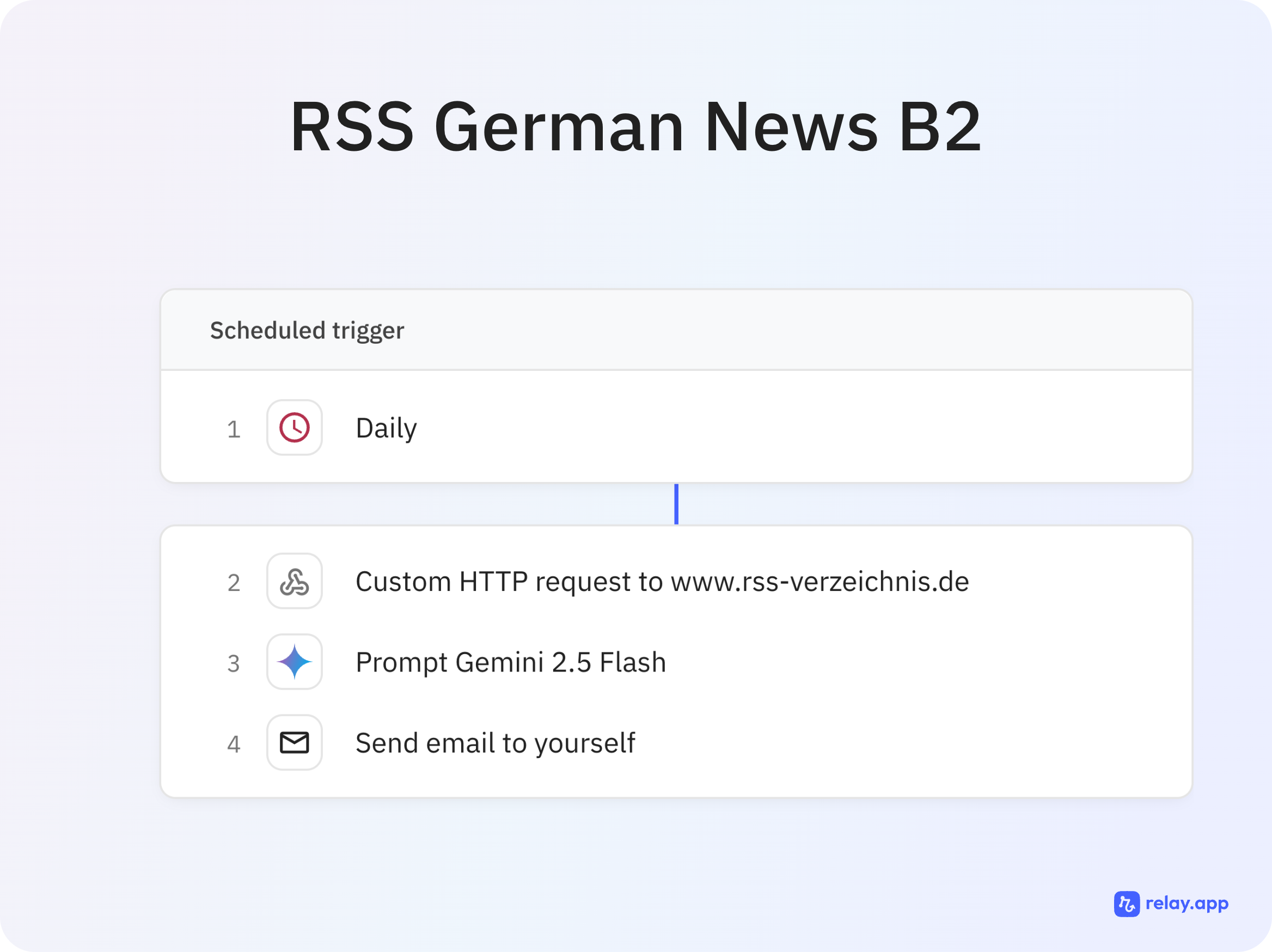
<p>Although there are quite a few no-code tools to choose from (<a href="https://www.make.com/en" target="_blank">Make</a>, <a href="https://n8n.io/" target="_blank">n8n</a>, <a href="https://www.lindy.ai/">Lindy</a>, <a href="https://zapier.com/">Zapier</a>), I chose <a href="https://www.relay.app/" target="_blank">Relay.app</a> for its intuitive design, simplified workflow setup and the wealth of online resources. The workflow (as shown in the screenshot below) is straightforward: it is triggered every day at 8am; it checks the RSS feed of Die Zeit (a leading German news provider); an AI model then rewrites the news item to my B2 proficiency level, including vocabulary and grammar explanations in English; and finally, an email is sent to me.</p>

<p><a href="/public/AI_workflow.png"><img src="/public/AI_workflow.png" alt="Photo of an automated workflow on Relay.app" /></a></p>

<p>For those interested in the prompt mechanics, I have included the prompt as well. I opted to use Gemini’s 2.5 Flash as it is generally known to be good at language-related tasks (Relay.app gives the option to choose your model).</p>

<blockquote>
  <p>Pick 3 current news items and rewrite them so they are accessible to someone working towards a B2 CEFR level in German.</p>

  <p><strong>Rewriting Guidelines:</strong></p>

  <ul>
    <li>Length: Each news item should be 4-6 sentences (60-100 words) to provide sufficient context and detail.</li>
    <li>Use simple sentence structures while maintaining key information.</li>
    <li>Limit sentences to 15-20 words maximum.</li>
    <li>Replace complex vocabulary with B2-appropriate alternatives.</li>
    <li>Maintain factual accuracy while simplifying language.</li>
    <li>Include essential details: <strong>who, what, when, where,</strong> and basic <strong>why/how.</strong></li>
  </ul>

  <p><strong>Vocabulary Highlighting:</strong></p>

  <p>Highlight words that are:</p>

  <ul>
    <li>Above A2 level but essential for B2 comprehension.</li>
    <li>Key nouns, verbs, and adjectives central to understanding the news.</li>
    <li>Words with multiple meanings or specific contextual usage.</li>
  </ul>

  <p><strong>Grammar Explanations:</strong></p>

  <p>Focus explanations on:</p>

  <ul>
    <li>Grammar points that appear in your rewritten text.</li>
    <li>Common B2-level challenges (cases, verb positions, subordinate clauses).</li>
    <li>Maximum 2-3 grammar points per news item to avoid overwhelming learners.
Write all grammar explanations in English for better comprehension.</li>
  </ul>

  <p><strong>Example:</strong></p>

  <p>Nachricht 1: Manager in der Türkei
In der Türkei <strong>stehen</strong> einige wichtige Manager <strong>vor Gericht</strong>. Sie hatten Präsident Erdoğan <strong>kritisiert</strong>. Aber jetzt, in der <strong>Krise</strong>, braucht Erdoğan ihre Hilfe.</p>

  <p><strong>Vokabeln:</strong></p>

  <ul>
    <li><strong>stehen</strong> (steht, stand, gestanden) – to stand; (here) to be (e.g., before a court)</li>
    <li><strong>vor Gericht</strong> – before court / on trial</li>
    <li><strong>der Präsident</strong> (die Präsidenten) – the president</li>
    <li><strong>die Krise</strong> (die Krisen) – the crisis</li>
  </ul>

  <p><strong>Grammatik-Erklärung:</strong></p>

  <ul>
    <li><strong>Verb Position in Main Clauses:</strong> In a German main clause, the conjugated verb (in this case, <em>stehen</em> - to stand/to be) always occupies the second position. For example: “In der Türkei stehen Manager vor Gericht.” (In Turkey, managers are on trial.)</li>
    <li><strong>Dative with the Preposition “vor”:</strong> The preposition “vor” (before/in front of) can take either the dative or accusative case. When used with “vor Gericht” (before court), it expresses a location or state, which is why the dative case is used (das Gericht becomes dem Gericht). If “vor” were used with the accusative case, it would express movement.</li>
  </ul>
</blockquote>

<h3 id="the-bigger-picture">The Bigger Picture:</h3>

<p>Building this automated tool is an indication of how future SaaS platforms might evolve: hyper-personalised and built by the consumer themselves. There are several implications to this. On one hand, I’d imagine that the one-size-fits-all solution embraced by most enterprise solutions might be disrupted as consumers can now themselves craft and build solutions that are tailored for their use cases. This also means that consumers should be more tech-savvy, explore options that enable them to build tools on their own and generally embrace a more product mindset.</p>

<p>On the other hand, AI agents (when they really are there) can transform how societies function. There is talk of hyper-personalised learning rather than fixed curricula in schools and solo entrepreneurs running million-dollar businesses with AI agents handling customer support, content creation, and daily operations while they focus on strategy and growth.</p>

<p>Whether these materialise in the short-term or not, we cannot deny that AI automation is going to have a real impact on how we get things done. So, food for thought: What would you automate with AI?</p>]]></content><author><name>Nandu Rajagopala</name><email>nandu.rajagopala@cantab.net</email></author><summary type="html"><![CDATA[How I built an AI agent for German learning and what it signals about the future of personalised software]]></summary><media:thumbnail xmlns:media="http://search.yahoo.com/mrss/" url="https://nandurajagopala.com/public/AI_workflow.png" /><media:content medium="image" url="https://nandurajagopala.com/public/AI_workflow.png" xmlns:media="http://search.yahoo.com/mrss/" /></entry><entry><title type="html">Cases, whiteboards, and lectures: reflections and lessons learned in university teaching</title><link href="https://nandurajagopala.com/reflections-and-lessons-learned-in-university-teaching.html" rel="alternate" type="text/html" title="Cases, whiteboards, and lectures: reflections and lessons learned in university teaching" /><published>2024-05-01T00:00:00+00:00</published><updated>2024-05-01T00:00:00+00:00</updated><id>https://nandurajagopala.com/reflections-and-lessons-learned-in-university-teaching</id><content type="html" xml:base="https://nandurajagopala.com/reflections-and-lessons-learned-in-university-teaching.html"><![CDATA[<p>As far as new learnings and experiences go, this month is a milestone of sorts. To put it in a nutshell: I just finished teaching my first semester as an adjunct lecturer at a university of applied sciences in Berlin. It wasn’t exactly pre-planned; the opportunity, in all honesty, fell into my lap and I embraced it as another useful addition to my portfolio of skills and experiences.</p>

<p>From leading case sessions to conducting mini-workshops to responding in real-time to issues that sprang up, I thought I’d pen down some things that I’d learned, observed, and mulled over as a new lecturer.</p>

<p><a href="/public/teaching.jpg"><img src="/public/teaching.jpg" alt="Photo of a business case" /></a></p>

<h3 id="new-learnings">New learnings:</h3>
<p>👉🏽 In an academic environment where the go-to tool was the traditional lecture, basing my teaching pedagogy around the case method was certainly a risk-ridden move, more so because I was unfamiliar with the student body. Taking this risk helped me discover I could adapt and improvise when needed. Of course, preparing beforehand for the case and the case method was crucial and provided an invaluable structure, but the reality of teaching is that you can’t plan everything to a T.</p>

<p>👉🏽 There is a lot of uncertainty that surrounds the classroom experience and that’s one reason why the traditional lecture still dominates. I felt much more in control with a lecture and less dependent on external factors (e.g. student participation or preparation). In any case, given the long class sessions (2.5 hours), I opted for a 50:50 split between lecture and case during a class. Did the strategy work well? I’d say it worked positively with an MBA class but not so much with a postgrad course (presumably because the former had paid more, had some work experience, and was more invested in the course); I found myself having to pivot from the case method for one class very early on due to low engagement.</p>

<p>👉🏽 Teaching, in essence, is creative problem-solving, with the end goal of enabling students to learn the material in a way that suits them best. There was a fair amount of trial and error when trying to achieve this, especially as I was working in a non-selective environment. For example, when I realised that full-blown cases just weren’t resonating with some students, I tried shorter cases that could be read during class time. And when the topic was more practical and hands-on (design thinking), then the tool of choice was a workshop-style design activity.</p>

<p>👉🏽 Teaching is also about performance and storytelling. There generally is a gamut of facial and body expressions that run through the class at various points: interest, enthusiasm, boredom, arrogance, disinterest, and cynicism. Having a thick skin through all of this to deliver your lesson plan takes a toll, especially if you are dealing with difficult or disruptive students, and I can only hope that this experience has moulded me for the better.</p>

<p>👉🏽 Whether it was leading a case or taking on a subject at short notice, learning is a cornerstone of teaching. This doesn’t just apply to the preparation that you do before a class, but also to the different perspectives that you get exposed to inside the classroom. In a way, it was a privilege to revisit some topics, look at them from a different lens and be in a position to share things I’ve picked up professionally.</p>

<p>👉🏽 Sitting on the other side of a class for the first time, the biggest learning was how demanding a teaching job can be. If all goes well, it can certainly have its highs. At the end of the day, I can only hope that being in my class made a positive difference in someone’s life, either personally or professionally.  </p>

<h3 id="food-for-thought">Food for thought:</h3>
<p>👉🏽 This is a contentious point and gets written about a lot: while universities get more and more commercialised, students adopt a more customer-centric attitude. This shift raises questions about maintaining an honest, mutual two-way understanding between educators and students without fear of retribution. I’ve read a few posts online where lecturers talk about being caught in the middle (bullying students and dismissive management), and it honestly doesn’t sound like a recipe for long-term learning and development. </p>

<p>👉🏽 I’m not sure what the data on this suggests, but looking at learning from the other side of the table, I can’t help but speak in favour of selective classes at the tertiary level. I’ve seen bright students get dragged down by mediocre ones who have no interest in the subject or learning in general. There needs to be access to good-quality education for everyone but universities simply can’t be the place where poor parenting and educational deficiencies can be corrected.</p>

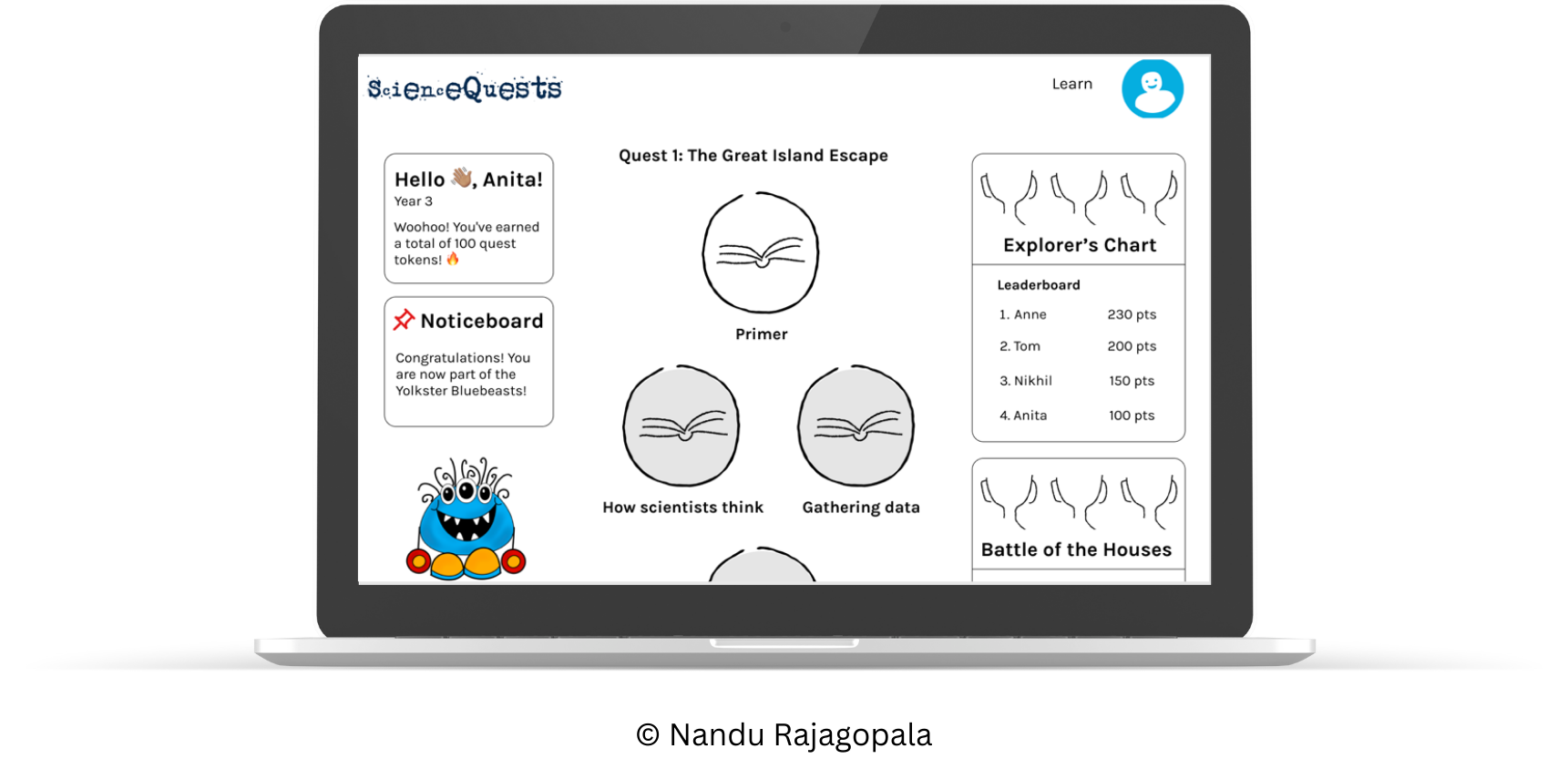
<p>👉🏽 There seems to be an explosion in <a href="https://medium.com/emerge-edtech-insights/challenger-universities-pt-3a-the-challenger-university-landscape-f7300bce7db2" target="_blank">‘challenger’ universities</a> that cater to different needs. Whilst there are some proven, long-established ones like the African Leadership University, and more recent, interesting ones like the London Interdisciplinary School, I’m doubtful of institutions that create degrees to cater to a job market (I’ve seen places that offer degrees in product management, for example). The latter might help short-term, but education, learning, and universities, especially in a world where things change constantly, cater to different needs. <a href="https://www.amazon.com/Career-Arts-College-Credentials-Connections/dp/0691239797/ref=sr_1_1?crid=1FXA014PP11Y2&amp;dib=eyJ2IjoiMSJ9.n2zTXwYwl6uK4Q6HPEGTvvHADfe_fpcXEAyNTCAL-pTBwKPHbh6JLyOASiaxRoUnKCf9NnBFFGO_fd2le-wUjt2NkhXwHN_XvuTEbXICPOpeANWWn67HKtgodIcrOYAwxK5GvBOKzKdubaTm9C6GgqDucULyeLma0qszxOtDouUMfOIMy-60eoR8FH82txr2PbunbevATMqFXIbD65qa_sbMwTH7kZb-ddBlFTjmKxM.qLA8VIs13cg6VYyjkTJpWOZq2TB5ZHySh9g_p4rfPVE&amp;dib_tag=se&amp;keywords=career+arts+ben&amp;qid=1716721230&amp;sprefix=career+arts+ben%2Caps%2C772&amp;sr=8-1" target="_blank">The Career Arts</a> by Ben Wildavsky makes a much more convincing argument for why traditional colleges and vocational avenues such as bootcamps exist. Essentially, Wildavsky says that colleges and universities provide a foundation for critical thinking and intellectual pursuits whereas bootcamps and other vocational certifications act as valuable add-ons to one’s career. In this spirit, it shouldn’t be an either/or decision and any degree that doesn’t teach you the fundamentals of learning or create an environment for personal growth is best avoided. </p>]]></content><author><name>Nandu Rajagopala</name><email>nandu.rajagopala@cantab.net</email></author><category term="teaching" /><category term="lecturer" /><category term="case-method" /><summary type="html"><![CDATA[Challenges, learnings, and evolving dynamics in higher education from the perspective of a new lecturer.]]></summary><media:thumbnail xmlns:media="http://search.yahoo.com/mrss/" url="https://nandurajagopala.com/public/teaching.jpg" /><media:content medium="image" url="https://nandurajagopala.com/public/teaching.jpg" xmlns:media="http://search.yahoo.com/mrss/" /></entry><entry><title type="html">Launching a startup — some key lessons learned</title><link href="https://nandurajagopala.com/launching-a-startup-some-key-lessons-learned.html" rel="alternate" type="text/html" title="Launching a startup — some key lessons learned" /><published>2024-04-01T00:00:00+00:00</published><updated>2024-04-01T00:00:00+00:00</updated><id>https://nandurajagopala.com/launching-a-startup-some-key-lessons-learned</id><content type="html" xml:base="https://nandurajagopala.com/launching-a-startup-some-key-lessons-learned.html"><![CDATA[<p>I spent the second half of 2023 building ScienceQuests (a gamified web app to help kids learn science) and exploring ways of making online learning more effective and engaging for kids. Having spent some time researching how people learn, talking to potential users, building/testing a prototype, and refining my pitch for a competitive startup grant that I was shortlisted for, I thought I’d summarise some lessons that I learnt from the overall experience.</p>

<p><a href="/public/Prototype.png"><img src="/public/Prototype.png" alt="ScienceQuests prototype" /></a>
<em>An initial prototype of ScienceQuests</em></p>

<h3 id="identifying-a-problem">Identifying a problem:</h3>
<p>👉🏽 It isn’t enough to solve a problem; the key question is whether you are tackling a problem that customers would pay money to have solved. It can be sometimes difficult to separate signals from noise; is there really a problem or do you just want there to be a problem? Or are you force-fitting a pet solution onto what seems like a problem? In the world of parents and schools and education, the guiding light, unfortunately, is grades in an important exam, not learning for its own sake.</p>

<p>👉🏽 It’s wise to spend some time selecting a problem to work on. I’m not just talking about founder-market fit, but the decision-making process behind selecting what you want to work on. Did you, for example, wade through lots of ideas, weigh them, maybe test some assumptions, and then commit? Or did you go for the first idea that made business sense to you? I’m sure there isn’t a right or wrong answer here, but spending some time on brainstorming and idea selection can make life easier later on.</p>

<p>👉🏽 Sometimes it’s better to explore, build, learn, and come to your own conclusion. I remember speaking early on with an EdTech founder who warned me that the sector can be challenging. I have since heard it mentioned multiple times. But, having done your research, if you think you have a unique insight, have differentiated skills, and are passionate about the sector/problem, it’s always best to have a go.</p>

<h3 id="user-research-and-prototyping">User research and prototyping:</h3>
<p>👉🏽 Sourcing and interacting with users for research can give you a glimpse of the sales process. It’s also a good opportunity to check if you’d enjoy having your intended audience as customers and if you can bring yourself to empathise with them. If there isn’t some sort of connection, I doubt if anyone would be able to withstand headwinds when times get tough.</p>

<p>👉🏽 Knowing how to code can be a double-edged sword and can stop you from thinking about the smallest possible thing that can be built to test your idea/hypothesis. For ScienceQuests, although the landing page saw an organic 20% conversation (email signups to visits), I found that it was easier to set up research interviews when there was a promise of something to see/do. In fact, having a couple of kids try out the prototype and gather feedback in real time was eye-opening.</p>

<h3 id="finding-the-right-co-founder">Finding the right co-founder:</h3>
<p>👉🏽 Everyone says this and I’ll just re-iterate: finding a co-founder who is the right fit is hard. Although some online platforms can help (e.g. Y-Combinator’s), they aren’t a magic pill since the vast majority are just silent observers. I’m not entirely sure if I agree with this but I’ve seen it mentioned that the ability to attract a co-founder with only the promise of equity is in itself a way of validating an idea. I say I’m not sure because it really depends on the other party’s interests and knowledge of the sector. In a world where too many individual contributors get promoted to leadership roles, I was also amazed by how many wanted to be CEOs without ever having worked in an operational role before and/or having the ability to empathise.</p>

<h3 id="you-against-the-world">You against The World:</h3>
<p>👉🏽 In an ever-changing world, being a generalist or, at least having the ability to be skills-fluid, is under-appreciated. In fact, I think in certain societies, it is sometimes looked at with near suspicion or worse, a disqualification. Innovation comes from the mix-and-match of the things you’ve been exposed to and, given the multiple tasks I had to juggle (prototyping to research to marketing), I was glad for some of the varied experiences that I’ve been fortunate enough to have.</p>

<p>👉🏽 Sometimes, it’s less about you or your idea, but more about you being in the right place at the right time with the right people. A lot of things need to be in place to get things off the ground, and some might not even be in your control. For example, even if you have a wide network with relevant expertise, not everyone might be in the same phase in life as you are to join as a co-founder. Whether you go on to build a large business or your idea fizzles out at the outset, it is important to have that sense of humility.</p>]]></content><author><name>Nandu Rajagopala</name><email>nandu.rajagopala@cantab.net</email></author><summary type="html"><![CDATA[Notes, tips and insights from building ScienceQuests, a gamified web app to help kids learn science.]]></summary><media:thumbnail xmlns:media="http://search.yahoo.com/mrss/" url="https://nandurajagopala.com/public/Prototype.png" /><media:content medium="image" url="https://nandurajagopala.com/public/Prototype.png" xmlns:media="http://search.yahoo.com/mrss/" /></entry></feed>